漠河上的光柱和猎户座
(原标题: Light Pillars and Orion over Mohe)
2026-03-23
浏览次数: 1810
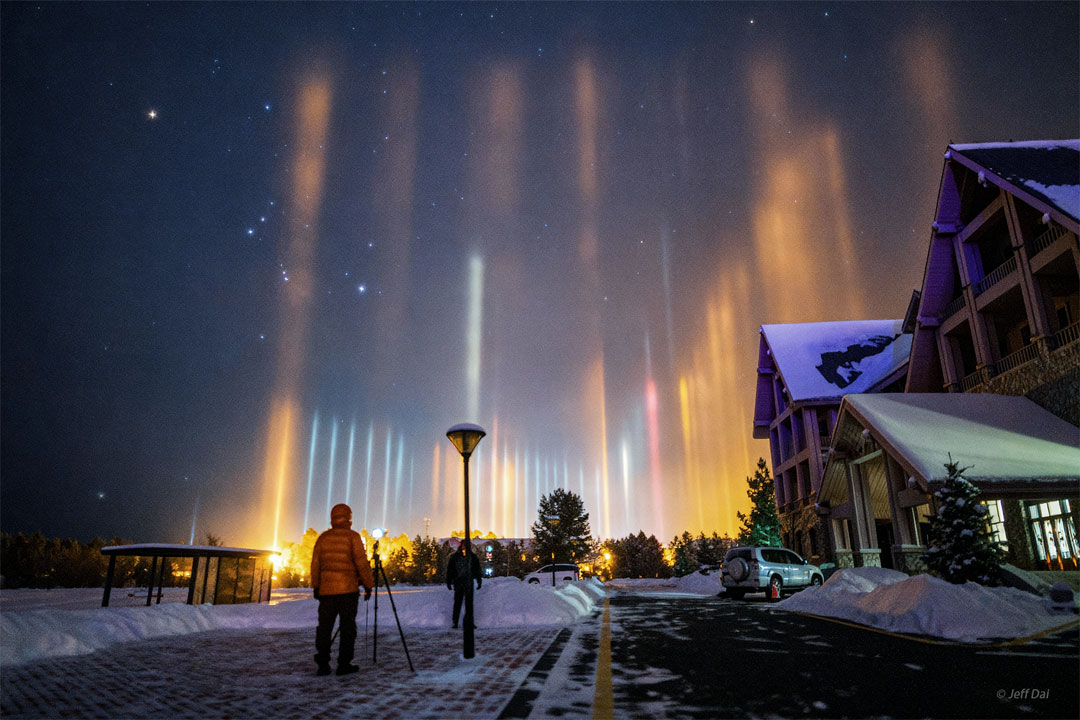
那条街的尽头发生了什么?这里的照片不是极光,而是光柱,一种通常更近的现象。在地球上的大多数地方,幸运的观测者都能看到太阳柱,这是一种从太阳上延伸出来的光柱,是由平面抖动的冰晶反射来自上层大气的阳光造成的。通常,这些冰晶在到达地面之前就蒸发了。然而,在冰点温度下,地面附近可能会形成扁平的飘动的冰晶,有时被称为水晶雾。这些小冰晶反射的可能不是太阳,而是地面的光。这张特色照片不仅捕捉到了众多的光柱,还捕捉到了标志性的猎户座,拍摄于中国最北端的城市漠河。
查看原文解释
What's happening at the end of that street? Pictured here are not auroras but light pillars, a phenomenon typically much closer. In most places on Earth, a lucky viewer can see a Sun pillar, a column of light appearing to extend up from the Sun caused by flat fluttering ice-crystals reflecting sunlight from the upper atmosphere. Usually, these ice crystals evaporate before reaching the ground. During freezing temperatures, however, flat fluttering ice crystals may form near the ground and are sometimes known as a crystal fog. These small ice crystals may then reflect not the Sun but ground lights. The featured image captured not only numerous light pillars but also the iconic constellation of Orion, and was taken in Mohe, the northernmost city in China.
© Jeff Dai (TWAN)