银河系下拉帕努伊岛的守护者
(原标题: The Guardians of Rapa Nui beneath the Milky Way)
2026-03-25
浏览次数: 2036
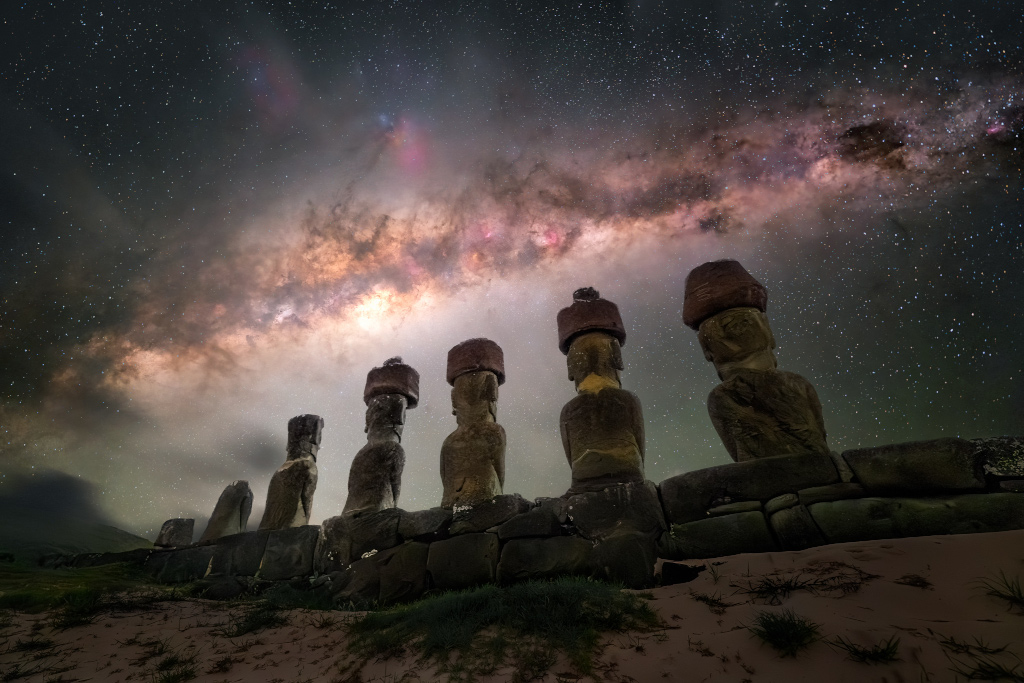
用今天的天文摄影师Rositsa Dimitrova的话来说,“这些沉默的哨兵在天空中看到了什么?”阿胡·汤加里基的火山雕像守护着拉帕努伊岛(复活节岛),这是一个波利尼西亚岛屿(1888年被智利吞并),位于距离南美洲海岸数千公里的太平洋上。由于该岛地处偏远,摩艾人背对着漆黑的海洋,能够凝视清澈而充满活力的夜空。照片中,这些比真人更大的雕像凝视着银河系的明亮带,部分被星际尘埃遮蔽,部分被地球的云层模糊。在如此晴朗的夜空下,拉帕努伊人建立了天文台,并利用天文观测来导航、校准日历、庆祝活动等等。像这样的图像提醒我们黑暗天空的重要性,保护它们下面的土地,保存它们所激发的文化。
查看原文解释
In the words of today's astrophotographer, Rositsa Dimitrova, "What have these silent sentinels watched pass across the sky?" The volcanic mo'ai (meaning statue) of Ahu Tongariki stand guard over Rapa Nui (Isla de Pascua, Easter Island), a Polynesian island (annexed by Chile in 1888) located thousands of kilometers off the coast of South America in the Pacific Ocean. Due to the island's remoteness, the mo'ai, with their backs to the dark ocean, are able to gaze upon a clear and vibrant night sky. Pictured, these larger-than-life statues stare at the bright band of the Milky Way, partly obscured by interstellar dust and blurred by Earth's clouds. Under such clear night skies, the Rapa Nui created observatories and used astronomical observations for navigation, calendar calibration, celebrations, and more. Images like this one remind us of the importance of dark skies, protecting the land underneath them, and preserving the culture that they inspire.
© Rositsa Dimitrova Text: Keighley Rockcliffe (NASA GSFC, UMBC CSST, CRESST II)