Photoshop之前的仙女座菌株
(原标题: Andromeda before Photoshop)
2026-09-27
浏览次数: 1524
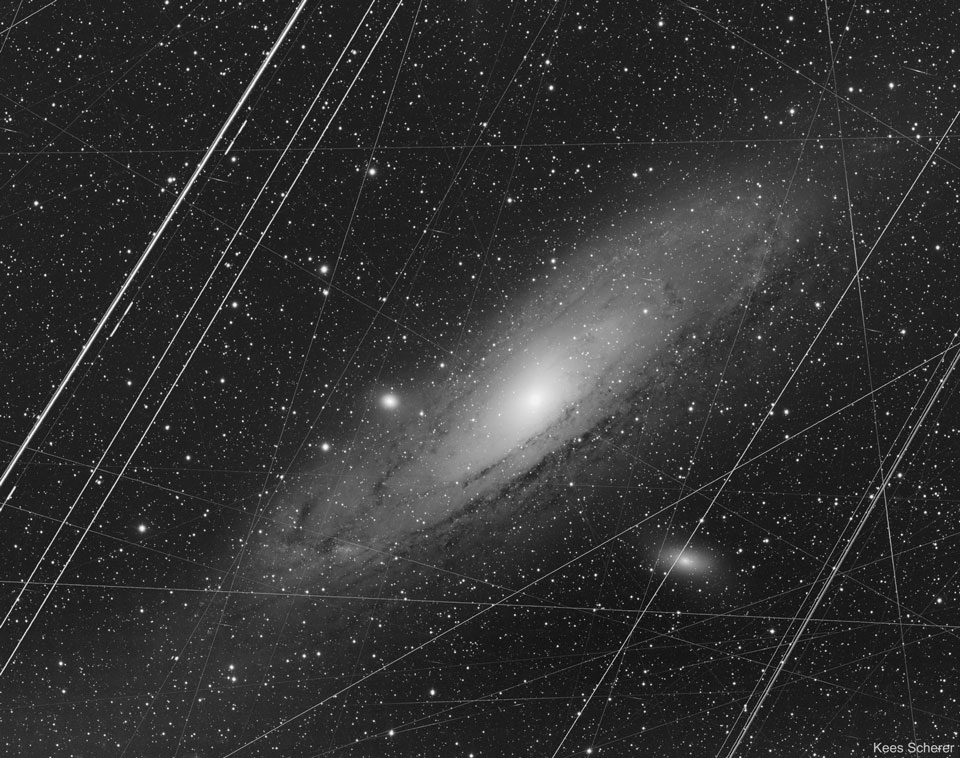
仙女座星系到底是什么样子的?这张特色图片展示了我们银河系最近的主要星系邻居是如何通过地球繁忙的天空长时间曝光并使用数码相机引入正常缺陷的。这张照片是2019年在葡萄牙的一个花园天文台拍摄的223张照片的堆叠,每张照片曝光300秒。明显的图像缺陷包括明亮的平行飞机轨迹、长而连续的卫星轨迹、短的宇宙射线条纹和糟糕的像素。这些缺陷实际上并没有被ps去除,而是通过一系列的计算机软件包(包括Astro Pixel Processor, DeepSkyStacker和PixInsight)大大减少了。所有这些工作并不是用与仙女座星系(M31)的真实相似度几乎没有关系的数字幻想来欺骗你,而是为了尽量减少与遥远星系无关的地球人工制品,从而更好地重现M31的真实样子。APOD的图片提交邮件已经更改。请参阅:APOD提交APOD的主要NASA网站正在迁移:从APOD . NASA .gov到science.nasa.gov/apod
查看原文解释
What does the Andromeda galaxy really look like? The featured image shows how our Milky Way Galaxy's closest major galactic neighbor really appears in a long exposure through Earth's busy skies and with a digital camera that introduces normal imperfections. The picture is a stack of 223 images, each a 300 second exposure, taken from a garden observatory in Portugal during 2019. Obvious image deficiencies include bright parallel airplane trails, long and continuous satellite trails, short cosmic ray streaks, and bad pixels. These imperfections were actually not removed with Photoshop specifically, but rather greatly reduced with a series of computer software packages that included Astro Pixel Processor, DeepSkyStacker, and PixInsight. All of this work was done not to deceive you with a digital fantasy that has little to do with the real likeness of the Andromeda galaxy (M31), but to minimize Earthly artifacts that have nothing to do with the distant galaxy and so better recreate what M31 really does look like. APOD's email for image submissions has changed. Please see: APOD Submissions APOD's main NASA site is moving: From apod.nasa.gov to science.nasa.gov/apod