土星B环的辐条
(原标题: Spokes on Saturn's B Ring)
2026-08-05
浏览次数: 1664
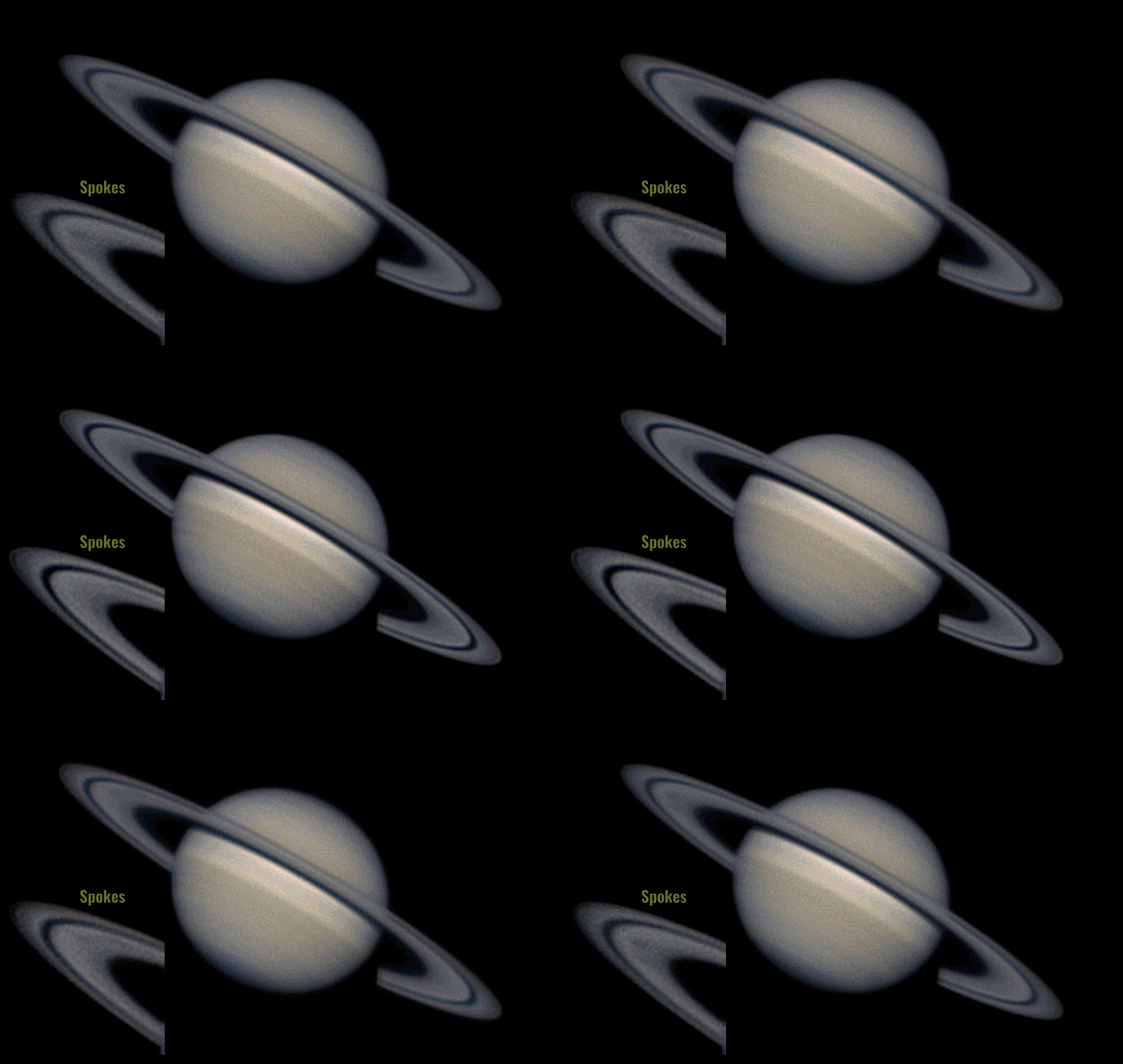
不要被土星幽灵般的辐条吓到!今天我们展示了土星和它的环前后循环的近两个小时的时间间隔。土星上的一天只有10个小时,所以两个小时的观测覆盖了相当一部分的自转。如果你仔细观察,一个可怕的阴影会随着土星B环的旋转而出现和消失。“旅行者2号”、“卡西尼号”和“哈勃”探测器数十年的观测表明,土星辐条的外观随着季节的变化而变化。和地球一样,土星的自转轴与环绕太阳的轨道平面相比是倾斜的。在土星春分期间,土星环远离太阳的倾斜程度较低,土星接收到的阳光和太阳风分布更均匀。尽管它们的起源仍然不确定,但土星的辐条可能是由太阳风和土星磁场之间的电磁相互作用造成的,漂浮在土星环上方的尘埃和冰的阴影和反射。寻找黑暗的天空,仰望这个八月,见证不受月球影响的英仙座流星雨!
查看原文解释
Don’t get spooked by Saturn’s ghostly spokes! Today we feature a nearly two-hour timelapse of Saturn and its rings looping forwards and backwards. A day on Saturn is only 10 hours long, so two hours of observation covers quite a bit of its rotation. If you look closely, a ghoulish shadow appears and disappears as Saturn’s B ring rotates. Decades of observation with Voyager 2, Cassini, and Hubble show the appearance of Saturn’s spokes varies with the planet’s seasons. Like Earth, Saturn’s spin axis is tilted compared to the plane of its orbit around the Sun. During Saturn’s equinox, the rings are less tilted away from the Sun and the planet receives more evenly distributed sunlight and solar wind. Although their origin is still uncertain, Saturn’s spokes may be shadows of and reflections off of dust and ice levitating above the rings caused by electromagnetic interactions between the solar wind and the planet’s magnetic field. Find dark skies and look up this August to witness the Perseid meteor shower uninhibited by the Moon!
© Brad Croslin Text: Keighley Rockcliffe (NASA GSFC, UMBC CSST, CRESST II)