彩虹湾
(原标题: The Bay of Rainbows)
2026-02-12
浏览次数: 4481
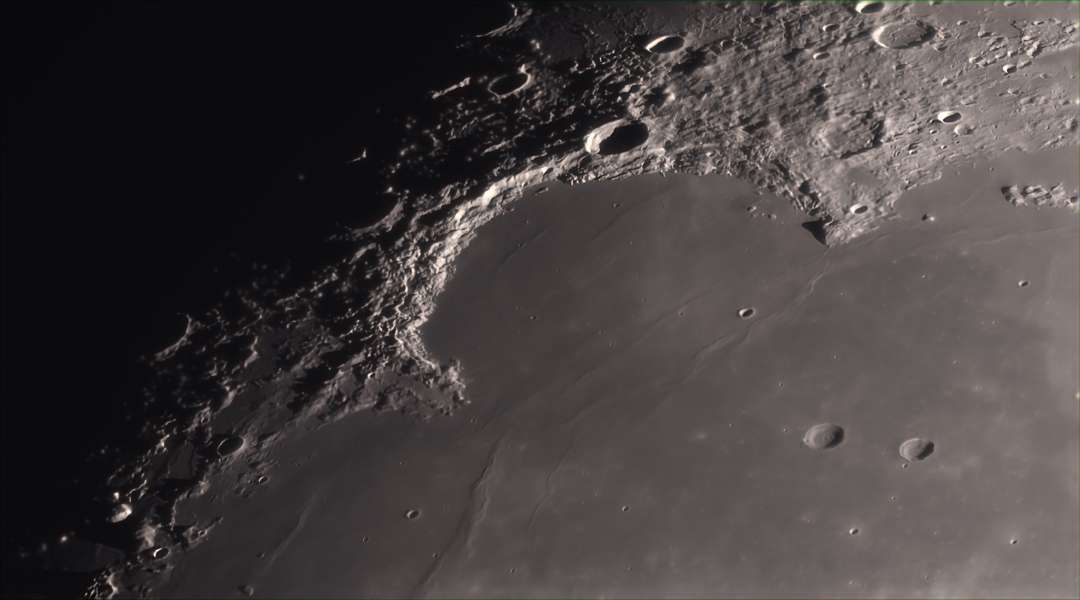
覆盖在我们熟悉的月球表面的黑暗、光滑的区域用拉丁语命名为海洋。这种命名惯例是历史性的,尽管对于太空时代的居民来说,这似乎有点讽刺,因为他们认为月球基本上是一个干燥无空气的世界,而光滑、黑暗的地区则是熔岩泛滥的撞击盆地。例如,这张用望远镜拍摄的月球远景图,可以看到西北广阔的雨海(Mare Imbrium)和虹窦湾(Sinus Iridum)。这个海湾被汝拉山脉环绕,直径约250公里。在当地日出之后,这些山脉形成了虹膜窦陨石坑壁的一部分。它们崎岖的阳光弧线的顶部是拉普拉斯角(海角),距离海湾表面近3000米。圆弧的底部是赫拉克利德角,乔瓦尼·卡西尼在1679年用望远镜绘制的月球图中把它描绘成一个有着飘逸长发的月亮少女的侧面。
查看原文解释
Dark, smooth regions that cover the Moon's familiar face are called by Latin names for oceans and seas. That naming convention is historical, though it may seem a little ironic to denizens of the space age who recognize the Moon as a mostly dry and airless world, and the smooth, dark areas as lava-flooded impact basins. For example, this telescopic lunar vista, looks over the expanse of the northwestern Mare Imbrium, or Sea of Rains and into the Sinus Iridum, the Bay of Rainbows. Ringed by the Jura Mountains (montes), the bay is about 250 kilometers across. Seen after local sunrise, the mountains form part of the Sinus Iridum impact crater wall. Their rugged sunlit arc is bounded at the top by Cape (promontorium) Laplace reaching nearly 3,000 meters above the bay's surface. At the bottom of the arc is Cape Heraclides, depicted by Giovanni Cassini in his 1679 telescope-based drawings mapping the moon, as a moon maiden seen in profile with long, flowing hair.
© Olaf Filzinger