米兰达重新审视
(原标题: Miranda Revisited)
2026-02-09
浏览次数: 6167
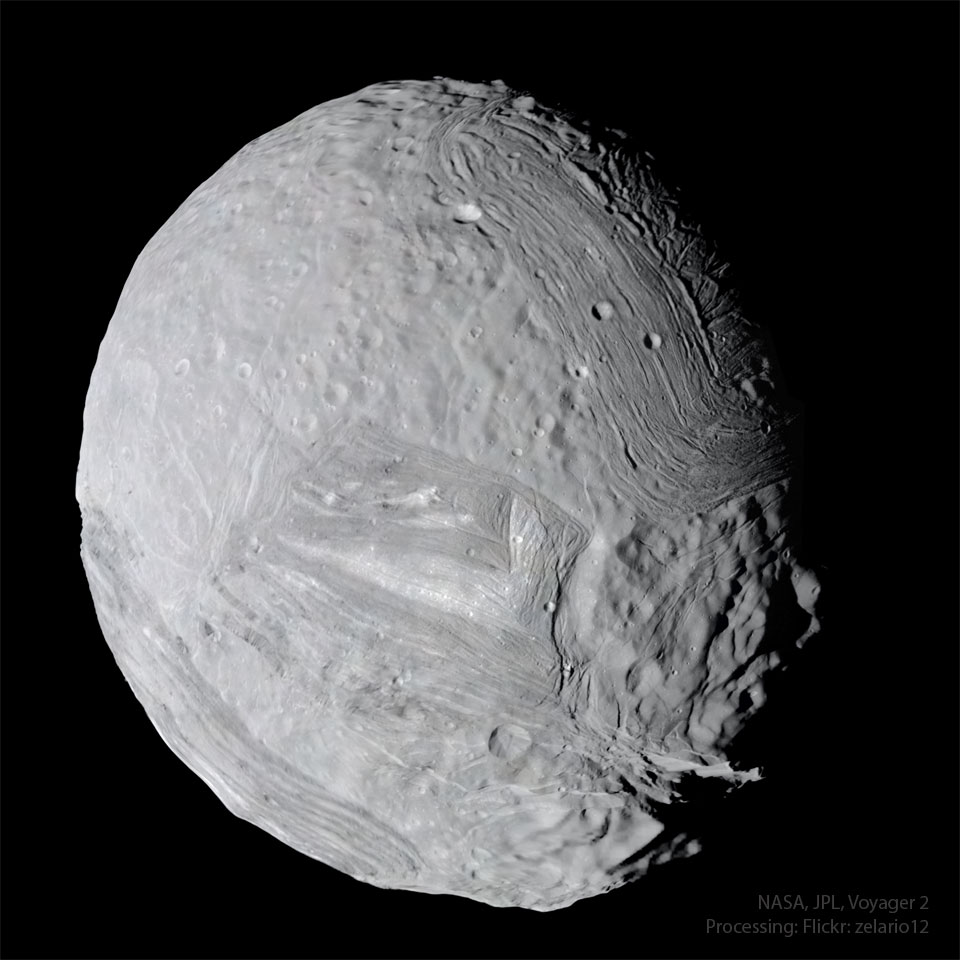
米兰达到底是个什么样的人?从视觉上看,来自美国宇航局旅行者2号的旧图像最近被合并并重新修复,从而产生了天王星500公里宽的卫星的特色图像。在20世纪80年代末,旅行者2号飞越天王星,接近这个陨石坑、断裂和不同寻常的沟槽卫星——以莎士比亚《暴风雨》中的一个角色命名。从科学上讲,行星科学家正在利用旧数据和清晰的图像,对形成米兰达严峻表面特征的原因进行新的理论推导。一个主要的假设是,在其冰冷的表面下,米兰达可能曾经拥有一个膨胀的液态水海洋,可能正在慢慢冻结。由于旅行者2号的遗留问题,米兰达加入了木卫二、土卫六和其他冰冷卫星的行列,在我们的太阳系中寻找水,可能还有微生物生命。拼图月亮:每日天文拼图
查看原文解释
What is Miranda really like? Visually, old images from NASA's Voyager 2 have been recently combined and remastered to result in the featured image of Uranus's 500-kilometer-wide moon. In the late 1980s, Voyager 2 flew by Uranus, coming close to the cratered, fractured, and unusually grooved moon -- named after a character from Shakespeare’s The Tempest. Scientifically, planetary scientists are using old data and clear images to theorize anew about what shaped Miranda's severe surface features. A leading hypothesis is that Miranda, beneath its icy surface, may have once hosted an expansive liquid water ocean which may be slowly freezing. Thanks to the legacy of Voyager 2, Miranda has joined the ranks of Europa, Titan, and other icy moons in the search for water, and, possibly, microbial life, in our Solar System. Jigsaw Moon: Astronomy Puzzle of the Day