LDN 1295:长颈鹿星云
(原标题: LDN 1295: The Giraffe Nebula)
2026-09-10
浏览次数: 1529
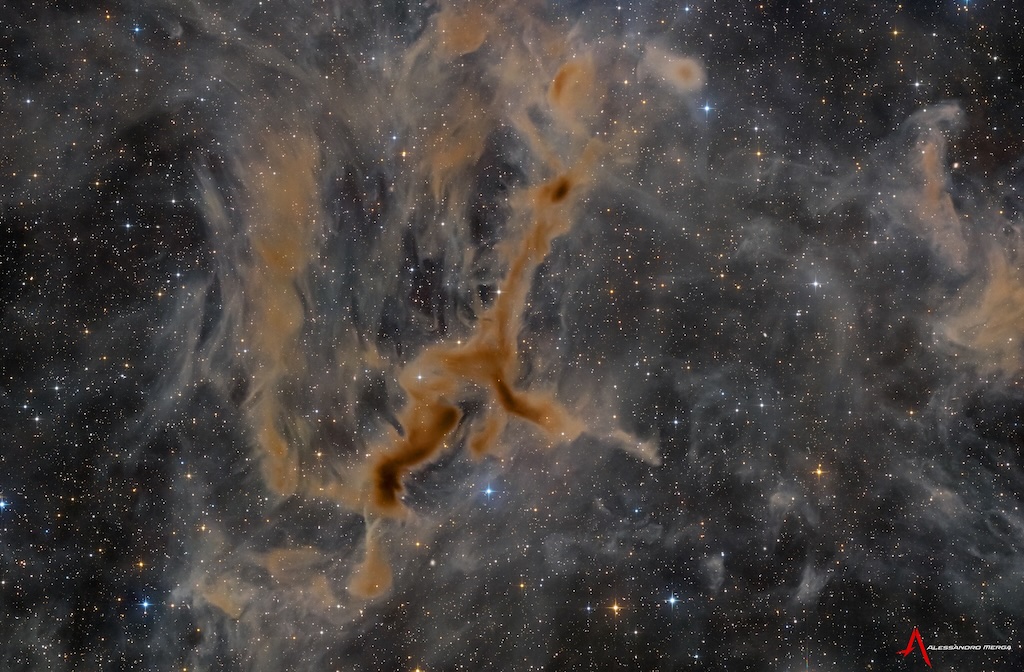
你觉得这个图像是什么样子的?许多人看到的是面朝右边的长颈鹿,脖子伸得高高的,腿长在中间(但有些人可能会看到松鼠)。这张特色图片显示的是LDN 1295,也被称为长颈鹿星云,位于神话中的仙后座女王星座。它是美国天文学家贝弗利·林兹于1962年编纂的《林兹暗星云目录》中的一个天体,她是天文学和天体物理学领域女性的先驱。暗星云是由尘埃和气体组成的星际云,它阻挡了后面恒星的可见光。这些星云通常是暗淡的,对天体摄影师来说是具有挑战性的目标。为什么我们在星云、云和几乎任何地方都能看到动物的形状和面孔?这是由于幻想性视错觉,我们倾向于寻找熟悉的模式。空想性视错觉可能为动物提供了一种进化优势,例如在识别(和躲避)捕食者方面。APOD的主要NASA网站正在迁移:从APOD . NASA .gov到science.nasa.gov/apod
查看原文解释
What does this image look like to you? Many see a giraffe facing right, with neck stretched high and long legs mid-stride (but some may see a squirrel instead). The featured image shows LDN 1295, also called the Giraffe Nebula, in the constellation of the mythical queen of Aethiopia (Cassiopeia). It is an object in the Lynds Catalogue of Dark Nebulas, compiled in 1962 by American astronomer Beverly Lynds, a pioneer for women in astronomy and astrophysics. Dark nebulas are interstellar clouds of dust and gas that block the visible light of the stars behind them. These nebulas are often faint and challenging targets for astrophotographers. Why do we see animal shapes and faces in nebulas, clouds, and pretty much everywhere? It is due to pareidolia, our tendency to look for familiar patterns. Pareidolia may provide animals with an evolutionary advantage, for example in identifying (and avoiding) predators. APOD's main NASA site is moving : From apod.nasa.gov to science.nasa.gov/apod
© Alessandro Merga Text: Cecilia Chirenti (NASA GSFC, UMCP, CRESST II)