具有宇宙巴基球的行星状星云
(原标题: A Planetary Nebula with Cosmic Buckyballs)
2026-06-04
浏览次数: 1764
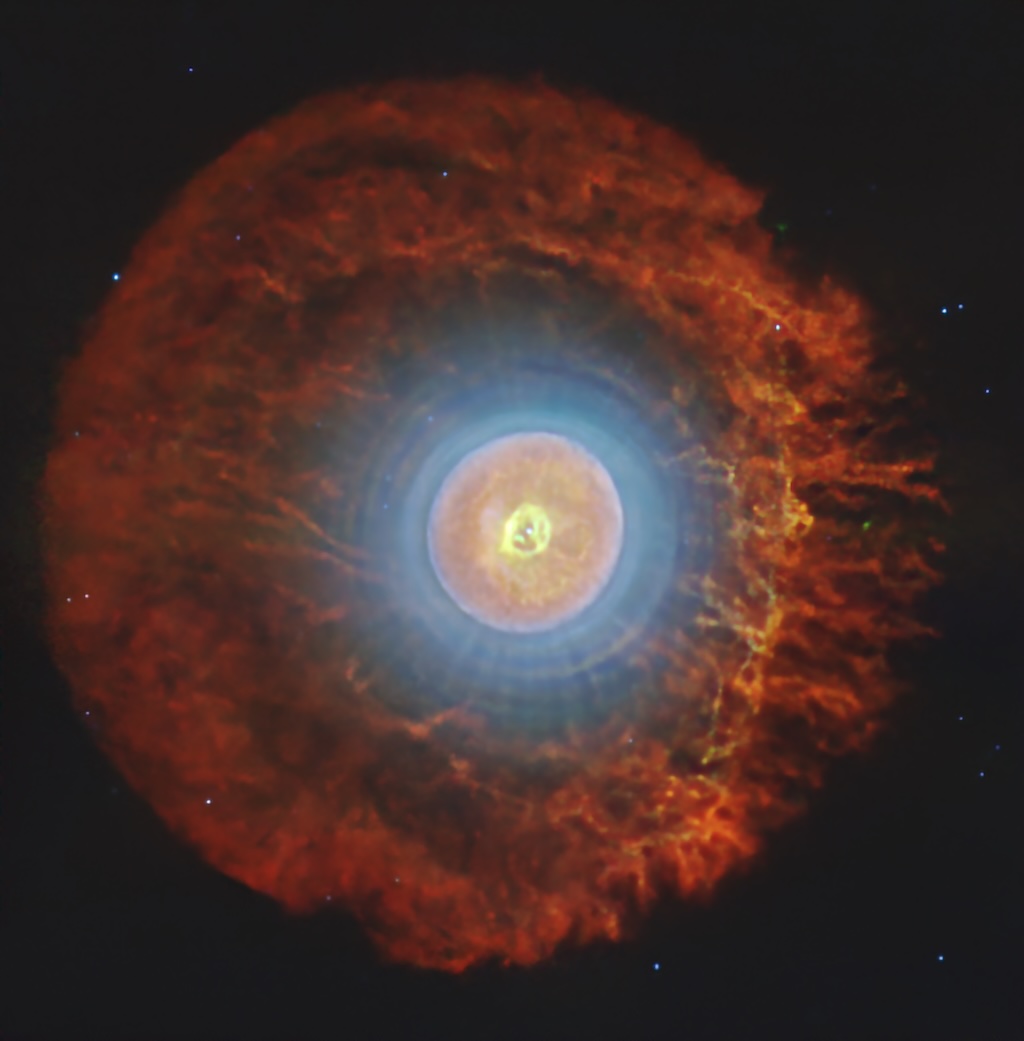
这个不寻常的星云内部发生了什么?这是詹姆斯·韦伯太空望远镜拍摄到的行星状星云Tc 1的精美细节,这是2010年巴基球首次被发现的天体位置。巴克敏斯特富勒烯——巴克球的正式名称——是一种由60个碳原子(C60)排列成足球形状的分子。这种分子以建筑师巴克明斯特·富勒的名字命名,因为它与他帮助推广的测地线圆顶相似。韦伯的新数据揭示了C60分子在这个星云中的位置,其几何形状令人震惊:它们分布在中心恒星周围的薄球形壳中,在这里可以看到星云发光的橙色中心区域的明亮边缘。仔细观察星云的中心,一个更令人困惑的特征出现了:一个精致的结构,形状奇怪地像一个颠倒的问号,为这个星云仍然提出的许多问题提供了合适的标点符号。
查看原文解释
What is happening inside this unusual nebula? Planetary nebula Tc 1, captured here in exquisite detail by the James Webb Space Telescope, is the celestial site where buckyballs were first identified in 2010. Buckminsterfullerene — as buckyballs are officially called — is a molecule with 60 carbon atoms (C60) arranged in the shape of a soccer ball. The molecule is named for architect Buckminster Fuller because of its resemblance to the geodesic dome he helped popularize. Webb’s new data reveal where the C60 molecules live in this nebula, and the geometry is striking: they populate a thin spherical shell around the central star, visible here as the bright edge of the nebula’s glowing orange central region. Look closely near the nebula’s heart and a more perplexing feature emerges: a delicate structure shaped uncannily like an upside-down question mark, fitting punctuation for the many questions this nebula still poses.