天王星最大的卫星:泰坦尼亚
(原标题: Uranus's Largest Moon: Titania)
2026-03-31
浏览次数: 2077
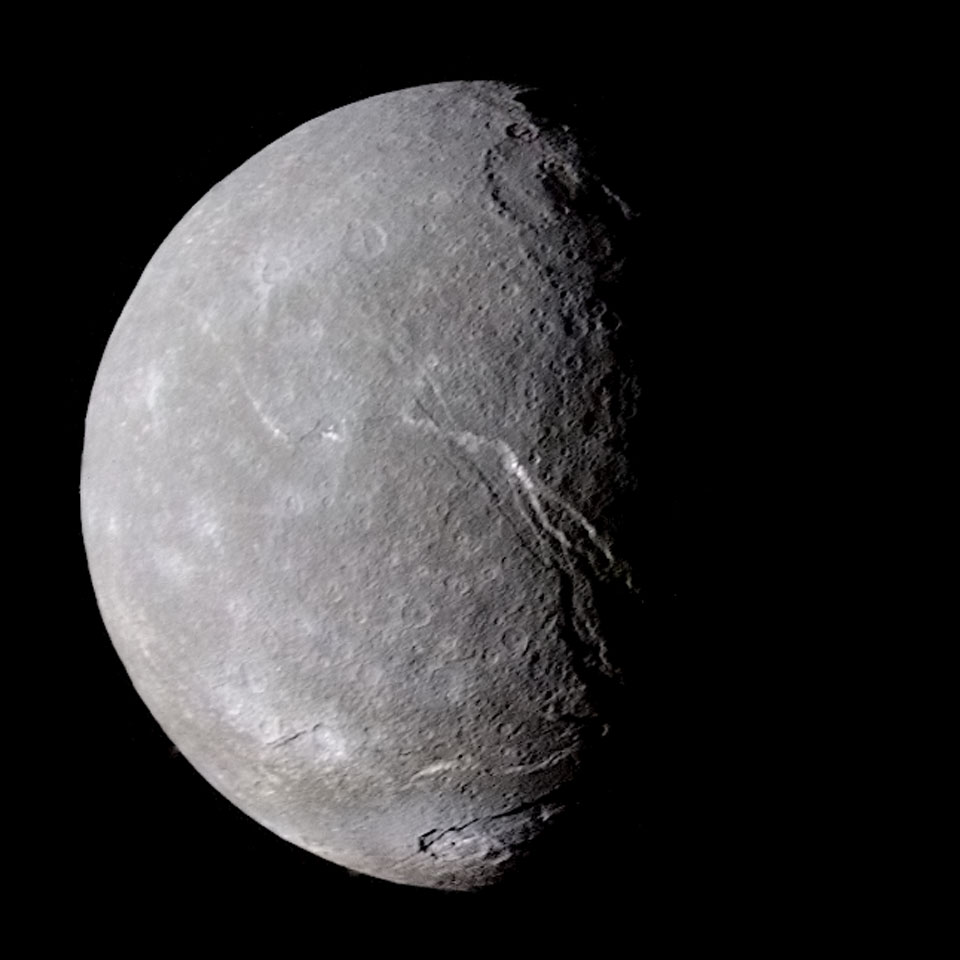
泰坦尼亚崎岖的地形是峡谷、悬崖和陨石坑的混合体。1986年,美国宇航局的行星际机器人宇宙飞船旅行者2号经过天王星最大的卫星并拍摄了这张特写照片。泰坦尼亚的沟槽与天王星的另一颗卫星Ariel上的沟槽相似,这表明泰坦尼亚在遥远的过去经历了一些剧烈的表面事件,可能与水的冻结和膨胀有关。虽然泰坦尼亚是天王星最大的卫星,但它的半径只有海卫一的一半左右。海卫一是天王星的姊妹行星海王星最大的卫星,而海王星本身比地球的月亮略小。1787年,威廉·赫歇尔发现了泰坦尼亚,它本质上是一个又大又脏的冰球,由一半水冰和一半岩石组成。最近有人推测,放射性加热会将一些地下冰融化成海洋。
查看原文解释
Titania's tortured terrain is a mix of canyons, cliffs, and craters. NASA's interplanetary robot spacecraft Voyager 2 passed the largest moon of Uranus in 1986 and took the feature picture. That the trenches of Titania resemble those on another moon of Uranus, Ariel, indicate that Titania underwent some violent surface event possibly related to water freezing and expanding in its distant past. Although Titania is Uranus's largest moon, it is only about half the radius of Triton - the largest moon of Uranus's sister planet Neptune, which itself is slightly smaller than Earth's Moon. Titania, discovered by William Herschel in 1787, is essentially a large dirty iceball that is composed of about half water-ice and half rock. There is recent speculation that radioactive heating melts some underground ice into oceans.