来自韦伯的红蜘蛛行星状星云
(原标题: Red Spider Planetary Nebula from Webb)
2026-02-03
浏览次数: 2515
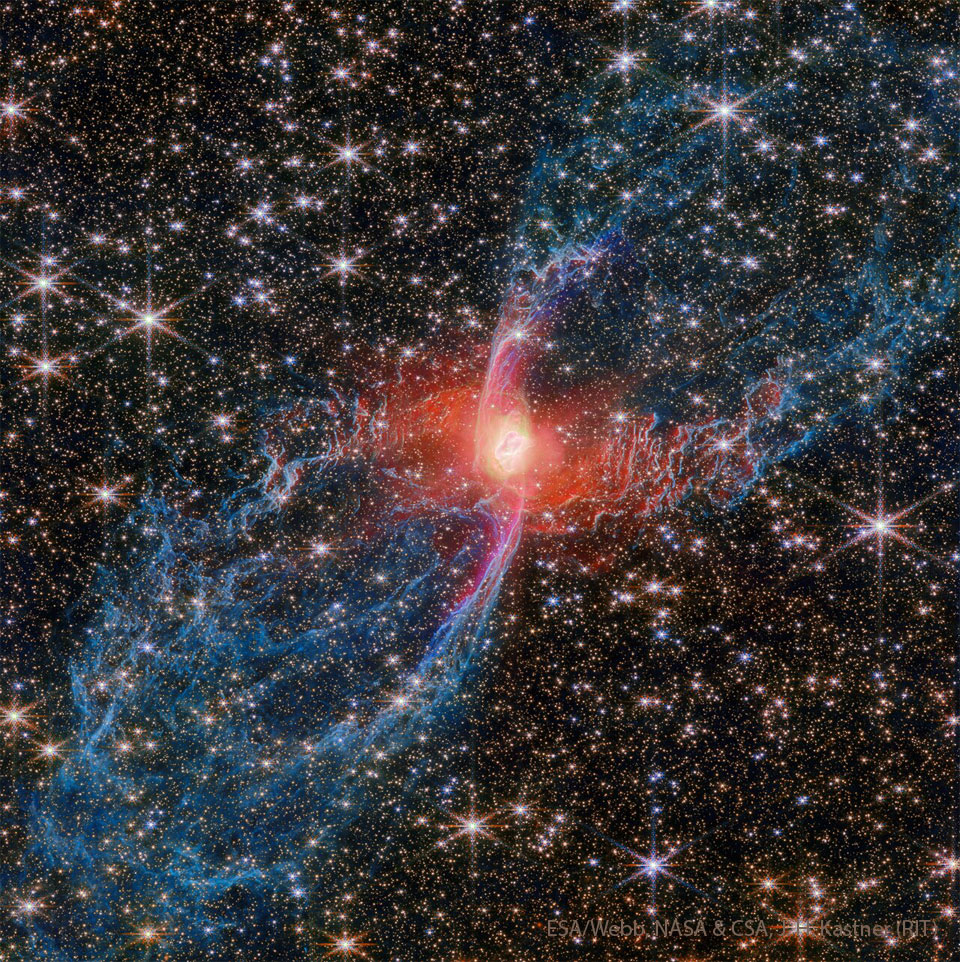
噢,行星状星云可以编织出多么复杂的网啊。红蜘蛛行星状星云展示了一个复杂的结构,当一颗正常的恒星喷出它的外层气体并变成一颗白矮星时,就会产生这种结构。官方标记为NGC 6537,这个双叶对称行星状星云拥有有史以来观测到的最热的白矮星之一,可能是双星系统的一部分。据测量,从中心恒星流出的内部风的速度超过每秒1000公里。这些风使星云膨胀,沿着星云壁流动,并引起热气体和尘埃的碰撞波。在詹姆斯·韦伯太空望远镜拍摄的这张特色的伪彩色红外照片中,被这些碰撞冲击捕获的原子放射出光。红蜘蛛星云位于射手座的方向。它的距离并不为人所知,但有人估计它大约有4000光年。
查看原文解释
Oh what a tangled web a planetary nebula can weave. The Red Spider Planetary Nebula shows the complex structure that can result when a normal star ejects its outer gases and becomes a white dwarf star. Officially tagged NGC 6537, this two-lobed symmetric planetary nebula houses one of the hottest white dwarfs ever observed, probably as part of a binary star system. Internal winds flowing out from the central stars, have been measured in excess of 1,000 kilometers per second. These winds expand the nebula, flow along the nebula's walls, and cause waves of hot gas and dust to collide. Atoms caught in these colliding shocks radiate light shown in the featured false-color infrared picture by the James Webb Space Telescope. The Red Spider Nebula lies toward the constellation of the Archer (Sagittarius). Its distance is not well known but has been estimated by some to be about 4,000 light-years.