ngc1898:大麦哲伦星云中的球状星团
(原标题: NGC 1898: Globular Cluster in the Large Magellanic Cloud)
2025-12-28
浏览次数: 2074
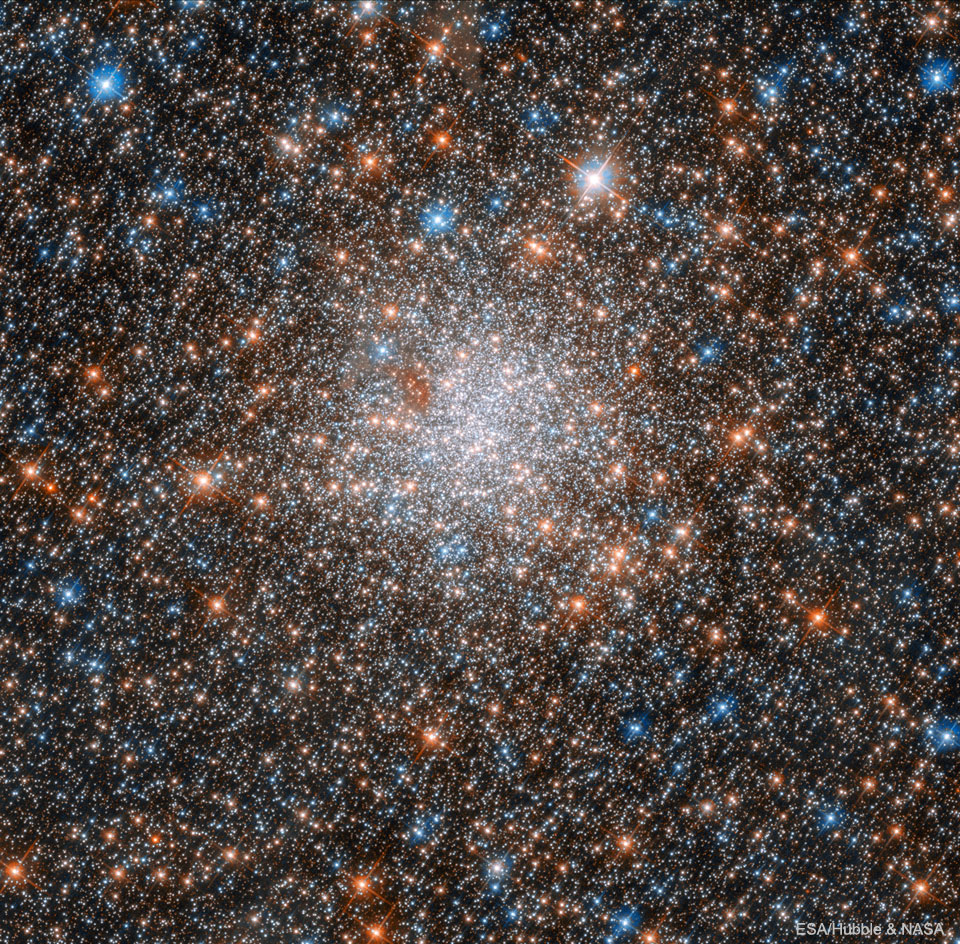
珠宝没有这么亮,只有星星才有。这张由哈勃太空望远镜拍摄的宝石盒般的图片中,几乎每一个点都是一颗恒星。现在,有些恒星比我们的太阳更红,有些更蓝——但它们都离我们更远。虽然光从太阳到达地球大约需要8分钟,但NGC 1898是如此遥远,以至于光需要大约16万年才能到达这里。这个巨大的恒星球,NGC 1898,被称为球状星团,位于大麦哲伦星云(LMC)的中央棒状星系——我们银河系的卫星星系。这张特色的多色图像包含了从红外线到紫外线的光线,拍摄它是为了帮助确定NGC 1898的恒星是在同一时间形成还是在不同时间形成。越来越多的迹象表明,大多数球状星团都是分阶段形成恒星的,尤其是NGC 1898中的恒星,是在与小麦哲伦星云(SMC)和银河系相遇后不久形成的。太空望远镜直播:哈勃和韦伯现在在看哪里?
查看原文解释
Jewels don't shine this bright -- only stars do. And almost every spot in this jewel-box of an image from the Hubble Space Telescope is a star. Now, some stars are more red than our Sun, and some more blue -- but all of them are much farther away. Although it takes light about 8 minutes to reach Earth from the Sun, NGC 1898 is so far away that it takes light about 160,000 years to get here. This huge ball of stars, NGC 1898, is called a globular cluster and resides in the central bar of the Large Magellanic Cloud (LMC) -- a satellite galaxy of our Milky Way Galaxy. The featured multi-colored image includes light from the infrared to the ultraviolet and was taken to help determine if the stars of NGC 1898 all formed at the same time or at different times. There are increasing indications that most globular clusters formed stars in stages, and that, in particular, stars from NGC 1898 formed shortly after ancient encounters with the Small Magellanic Cloud (SMC) and our Milky Way Galaxy. Space Telescopes Live: Where are Hubble and Webb looking right now?